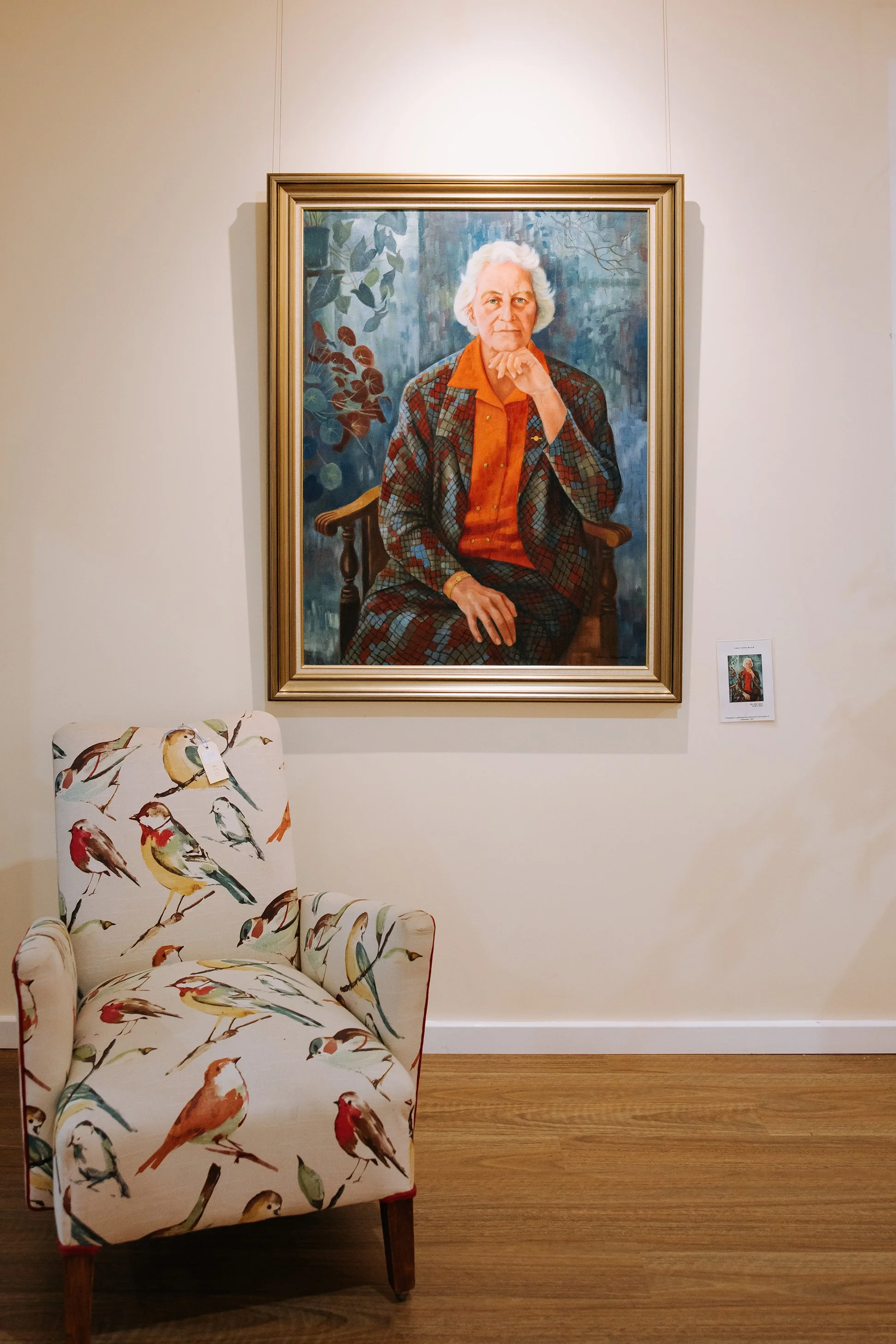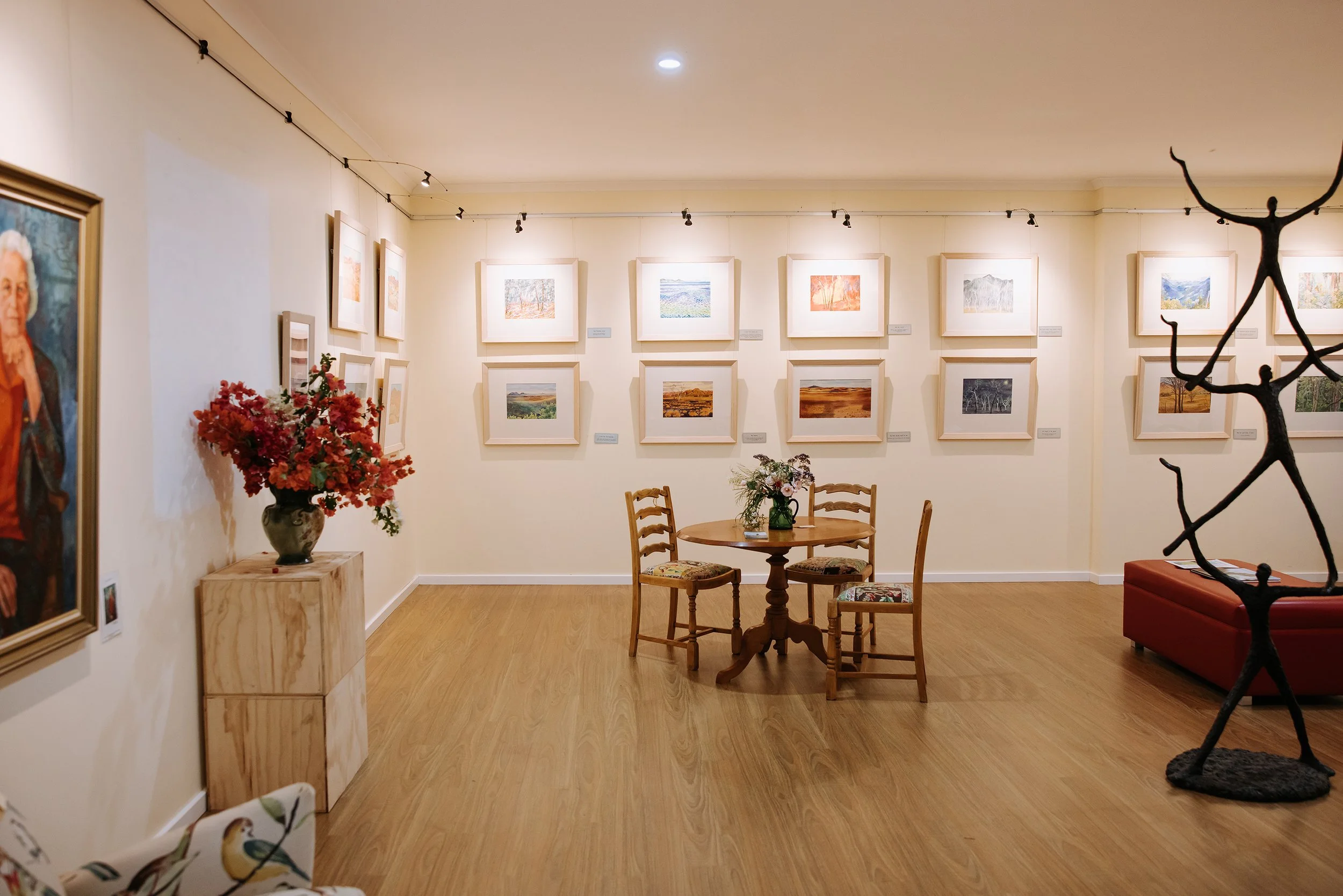
The Jean Isherwood Collection
The Jean Isherwood was born in Marrickville, Sydney, in 1911. At fourteen, she received a scholarship to the National Art School at East Sydney Technical College, now part of the Institute of Technical and Further Education.
Studying in the former Darlinghurst Gaol, Isherwood developed a strong foundation in linear perspective and precise draughtsmanship, skills she later applied to her rural landscapes.
In 1929, she began working as a fashion artist at an advertising agency while continuing her studies for five years at the National Art School and Royal Art Society as an evening student. She later became a freelance artist and illustrator.
Isherwood’s first exhibited work with the Australian Watercolour Institute in 1934 was a small painting of a building site. She subsequently became a regular participant in major art exhibitions and studied under Antonio Dattilo Rubbo.
She joined the Sydney Bohemian art scene and met John Dabron, whom she married in 1940. They moved to Springwood in the Blue Mountains, had two children, Josephine and Jacqueline, and divorced in 1948.
After the divorce, she resumed fashion drawing and illustration to support herself, continuing her art pursuits on weekends. She became a full-time painter in 1952.
From 1961 to 1974, Isherwood taught at the National Art School during a time when many in Sydney’s art community viewed traditional skills such as perspective, anatomy, and design as outdated, favoring Abstract Expressionism.
Isherwood was among the teachers who upheld the importance of traditional skills. Known for her exacting standards, she challenged students with complex still-life arrangements, including metal bins, broken chairs, and, on rainy days, a dripping sixteen-rib umbrella.
It was said that no student left Isherwood’s class without mastering freehand parallel lines and precise ellipses.
In 1959, Isherwood traveled throughout New South Wales by car. From then on, she focused on landscape painting and became a prominent exhibitor in art competitions associated with local Agricultural Societies, culminating each year at the Sydney Royal Easter Show.
From 1950 until her death, Isherwood won over 100 first prizes in various art competitions.
The Dorothea Mackellar Memorial Society raised funds to purchase the watercolour collection which is now housed in Gunnedah Shire Council’s Civic Gallery.