
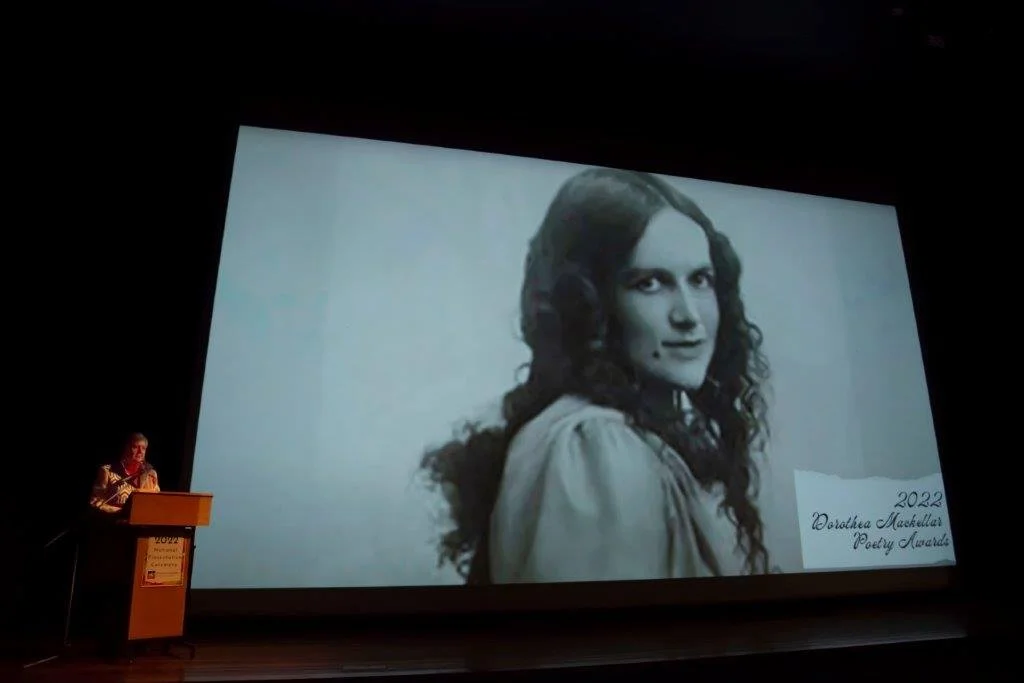
The Poetry of Dorothea Mackellar
Dorothea Mackellar wrote the first draft of what would become Australia’s most quoted and beloved poem, My Country, at age 19 while homesick in England. Published as Core of My Heart in the London Spectator in 1908, she was never fully satisfied with the verses. After returning to Australia, she revised the poem several times while living above her father’s consulting rooms in Buckland Chambers, Liverpool Street, Sydney, opposite the ANZAC Memorial.
Between 1910 and 1920, Dorothea wrote prolifically. In 1913, she published the novel Outlaw’s Luck, and with her childhood friend Ruth Bedford, co-authored The Little Blue Devil (1912) and Two’s Company (1914). During this period, especially throughout WWII, My Country gained widespread popularity, resonating with the patriotism inspired by the war and post-war nationalism.
The Australian countryside remained a significant source of inspiration for Dorothea. Two poems that reflect her connection to the Gunnedah district are Dawn (At the dawning of the day; On the road to Gunnedah …) and Burning Off (They’re burning off at the Rampadells; The tawny flames uprise …).
Dorothea continued to write and travel throughout the 1920s and into the early 1930s. Her work appeared in publications including London’s Spectator, Harper’s Magazine in the United States, and Sydney’s The Bulletin. During this time, she published four volumes of verse: The Closed Door (containing My Country), The Witchmaid and Other Verses, Dreamharbour, and Fancy Dress.
After her father’s death, Dorothea wrote less and often faced extended periods of ill health. However, her patriotism, love of nature, and affection for regional Australia had already been immortalised. My Country has consistently ranked among the most recognised and cherished Australian poems for over a century. It remains the quintessential Australian poem.