
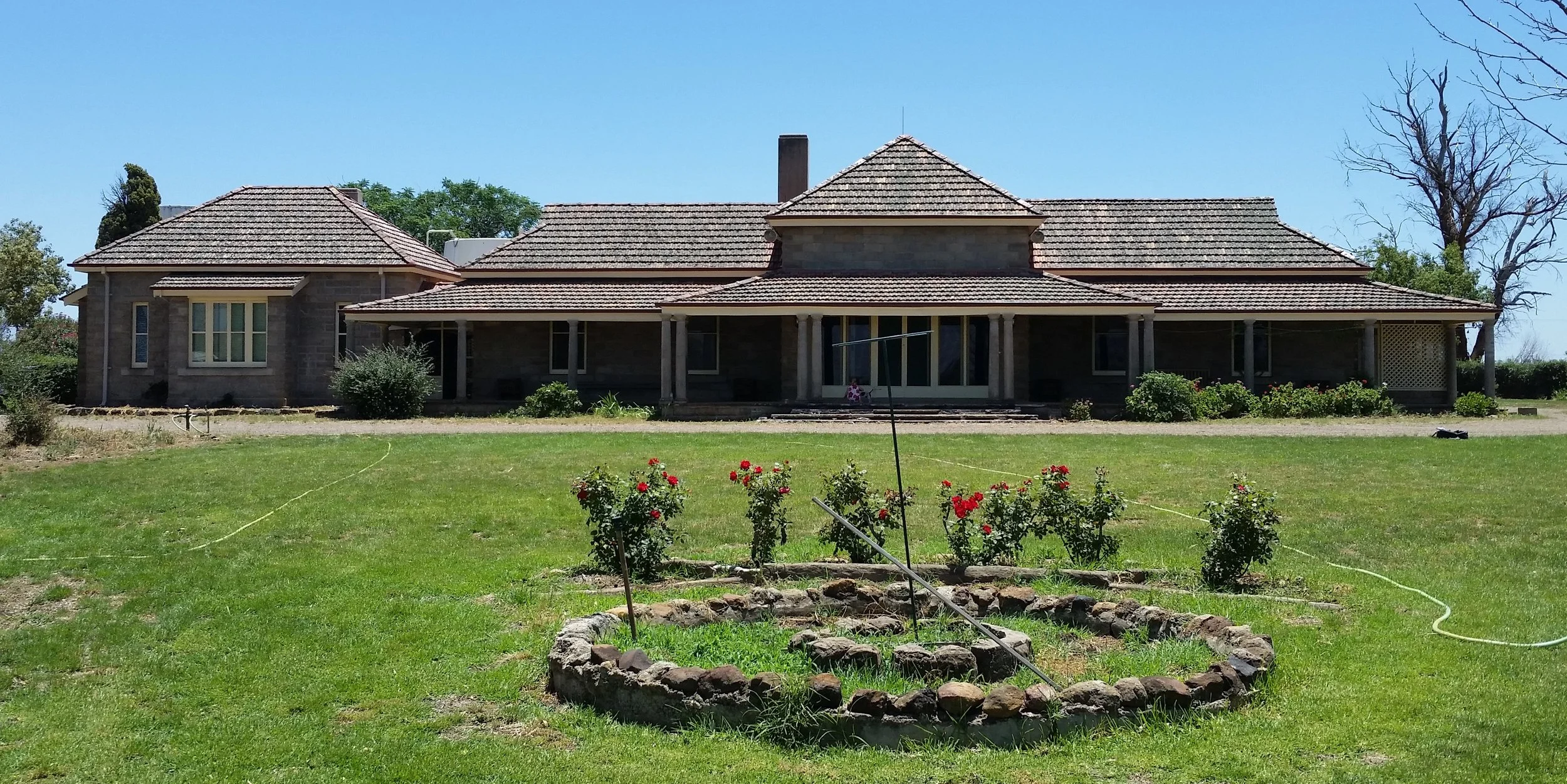
Saving Kurrumbede
Kurrumbede homestead and its outbuildings stood at the heart of a sprawling 6,600-acre station, a domain the Mackellar family called their own for nearly four decades.
Set 25 km northwest of Gunnedah along the Namoi River, the property bustled with sheep and cattle, while golden wheat fields stretched across the landscape.
Sir Charles Mackellar purchased the property in 1905, and his two sons, Malcolm and Eric, managed it. His eldest son Keith died in the Boer War.
Dorothea, his only daughter, often returned to Kurrumbede, drawing inspiration from its landscapes that found their way into her celebrated writings.
The Mackellar family built the homestead, enlisting John Reid, a trusted family friend from Sydney, as architect. Though the house saw major changes in the 1950s, its original shape endures. The outbuildings, largely untouched, offer a glimpse into the rhythms of station life, where horses and dogs played their part in daily routines. Behind the homestead, cottages, men’s quarters, stables, a stallion yard, a hay silo, a buggy shed, dog kennels, and an underground meat locker still stand.
Expansive gardens flourished here, with orchards heavy with fruit and vibrant vegetable and flower beds, all nourished by the life-giving waters of the Namoi River.
After the Mackellar family parted with the property in 1939, it passed through private hands until a coal company acquired it in 2010. Now, Whitehaven Coal intends to open a mine just 1.2 km from the historic homestead.
The company has stated its commitment to preserving the Kurrumbede homestead and garden. Whitehaven has allocated $500,000 over three years to restore the garden. The Dorothea Mackellar Memorial Society welcomed the initiative and will work with the company on the project.